
About the Project
I was a Fulbright scholar at the University of the West in Timisoara in the autumn of 2016 when I met Emil Biebel. Emil was the owner of Viniloteca, a vinyl shop just south of the Bega River. That chance meeting shaped this entire project, because through my friendship with Emil I began to see a connection between rock and roll and revolution in Timișoara.
It started with a jacket. My family and I had just arrived to Timisoara, and we hired a local tour guide to give us a sense of the history of the place. I happened to be wearing a black leather jacket with heavy rock and roll vibes, and when we met our tour guide, she looked me up and down, nodded at the jacket and asked, “Do you like rock and roll?” When I said yes, she smiled: “Then I have someone you need to meet.” After the tour ended at Piața Maria—the very place where the 1989 Revolution began—she led us down a set of stairs into a basement pub and record shop. That’s where I first met Emil.

Viniloteca became a second home. I stopped in most mornings for coffee, and my family and I often returned in the evenings to play games, meet locals, and, of course, talk about rock and roll. One day, over cappuccinos, I asked Emil how he got into vinyl business. He told me about smuggling rock and roll records and cassettes during the communist era. I knew such things happened behind the Iron Curtain, but not to the scale Emil described.
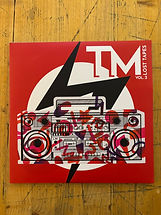
Emil is central to Timișoara’s rock culture. In the 1970s, he was trading records on the black market. In the 80s, he managed bands and organized concerts. After the revolution, he opened the city’s first vinyl shop, RockaRolla, which became a touchstone for an entire generation. He ran a club featuring live bands, founded his own record label, and in 2022 released The Lost Tapes, a three-LP set of unreleased tracks from Timișoara bands spanning the 80s through the 2000s. If you want to understand the city’s music scene, you start with Emil.
The three artfully done album covers of The Lost Tapes project


When I returned to Timisoara in 2025 as a Fulbright scholar, I wanted to learn more about the revolution—how it started, why it began there, and why memories of it are so uneven. Many locals still honor it; others have forgotten. Could the rock and roll culture of the 1980s have helped prepare the ground for revolt?
Viniloteca sits just around the corner from the Hungarian Reformed Church at Piața Maria, where the revolution began on December 16, 1989. Historical accounts describe how Pastor László Tőkés faced expulsion for criticizing the regime. People gathered outside his parish to protect him, the crowd grew, and soon tens of thousands filled the streets. When the military opened fire, people were killed and wounded. By week’s end, over 100,000 were assembled in Piața Victoriei, and Timișoara declared itself free of Ceaușescu. The uprising spread, culminating in the dictator’s overthrow and execution.History books tell that story, but they rarely answer the deeper question: why Timișoara? Revolutions don’t appear out of nowhere. They simmer. People get angry, organize, read, talk, whisper, and imagine new possibilities—until one day they act. For me, the answers weren’t in archives or museums. I found them in rock and roll.
--Eric Fretz, Professor, Regis University, Denver, CO USA